















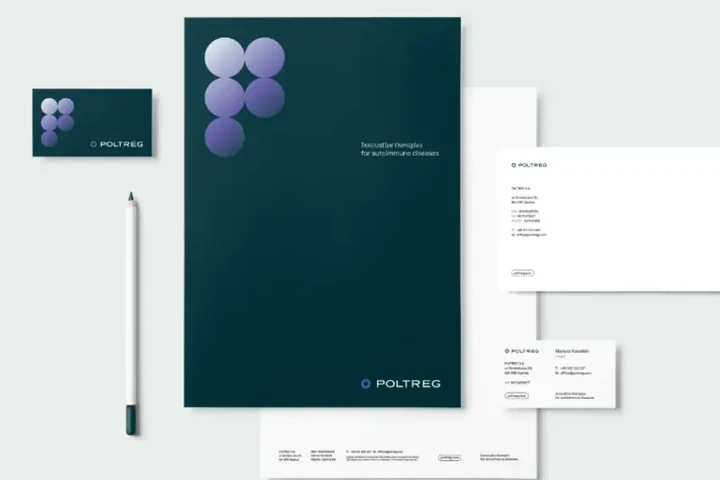

The board wants the new catalogue to look “premium”. So the cover gets soft-touch laminate, gold foil, raised varnish and embossing all at once. Each effect steals attention from the others, and each one adds cost and production time. In that situation we say it plainly: one well-chosen finish does more than four together.
Effects that pick out part of a print work best when they point to one thing: the logo, the product name or the title. The rest of the cover stays calm.
The most common types
- Lamination: a thin film over the whole surface, gloss, matt or soft touch. It protects the cover from scuffing and changes how it feels.
- Spot varnish: gloss varnish only in selected areas, most visible on a matt background.
- Hot foil stamping: gold, silver or coloured foil pressed on with a heated die. It gives a metallic shine that CMYK printing can’t.
- Embossing: a raised or recessed relief in the paper that you can feel under your finger.
Printers usually list die cutting alongside these: an unusual shape or a window in the cover. Strictly speaking it’s a binding process, but it gets planned together with the finishes.
Before you order
Finishes are planned from the start of a project, not stuck on at the end. Varnish, metallic foil and embossing each need a separate mask in the file, a shape that marks where the effect goes. The printer will tell you how to set it up.
A lot depends on the paper. The same varnish that shines clearly on matt laminate soaks into uncoated paper and almost disappears. Embossing needs thick, soft paper, so the paper weight is chosen together with the finish.
Hot foil and embossing need a die, a metal plate made for the design. On a hundred business cards its cost is spread over very few pieces; on a few thousand catalogues it almost vanishes. For short runs, some printers offer digital versions of varnish and foil that need no die.
A screen can’t show shine or relief. Judge the effect on samples from the printer, ideally on the same paper the run will use.